

Everything Is Protein Now
Snack food has bolted the word onto everything in sight. The reason is a drug, and the story these companies are telling investors is the reverse of the one their marketing departments are telling you
If you found your way here from the New York Post’s piece on us this week, welcome! We’re glad you’re here. If you were already subscribed, you got here first -- props.
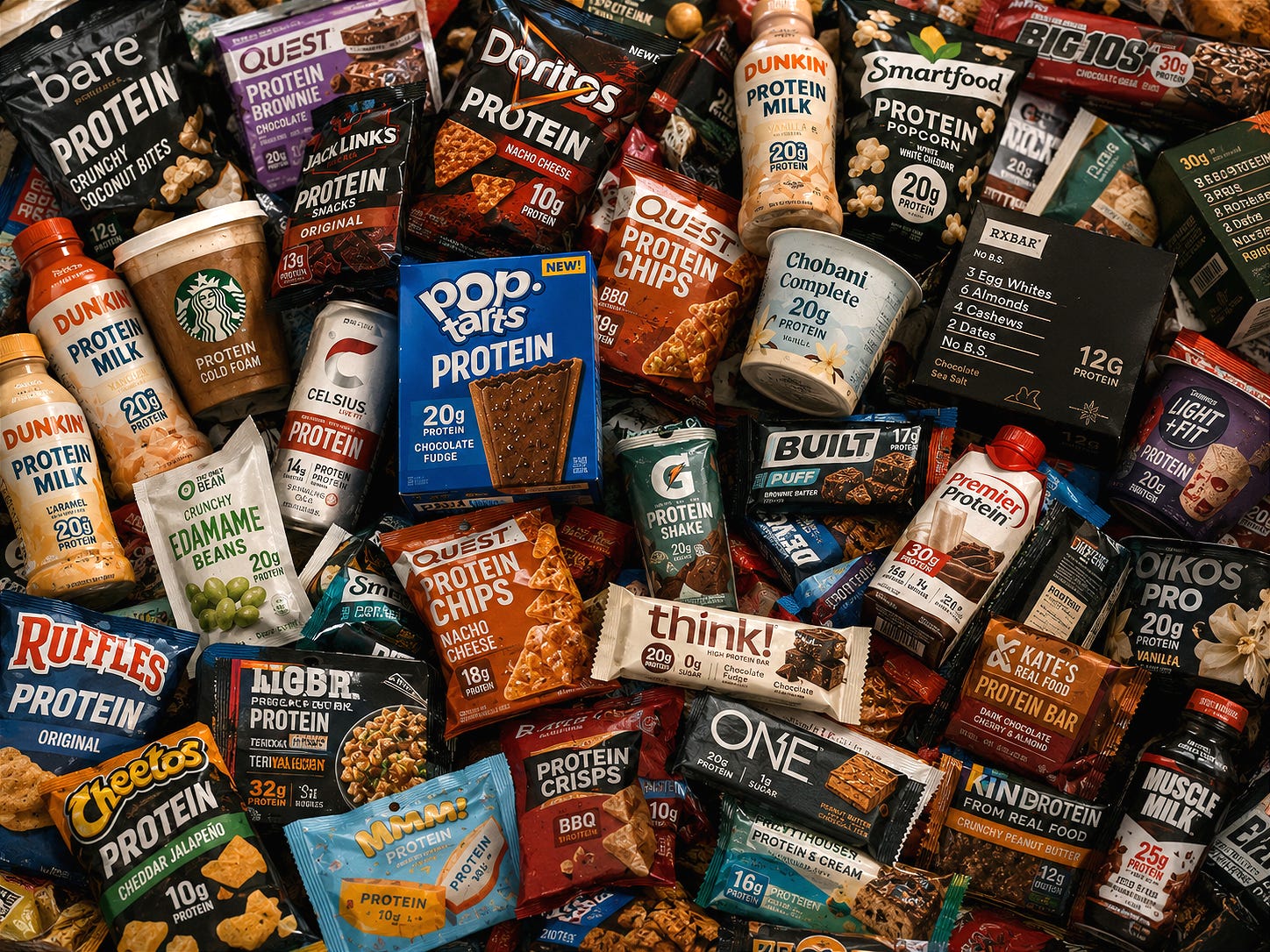
Either way, today’s letter is about a single word, one that in the space of about eight months has been attached to nearly every processed food in America: protein.
PepsiCo launched Doritos Protein this spring, ten grams of casein fused to a corn chip. Starbucks now ladles protein cold foam onto its lattes. There is Kraft protein cheese, Dunkin protein milk, protein popcorn, protein Pop-Tarts. Dollar sales of snacks advertising twenty grams or more are up 19% year over year. We are living through the great proteinification, and we will admit to some satisfaction in having seen it coming. Back in December, when Chipotle unveiled its first high-protein menu, built around a four-ounce cup of grilled chicken sold as a snack, we wrote that the cup was a starting gun. What is happening now is an industry-wide repositioning, and the repositioning is about a drug we know all too well by now.
The Word Is a Hedge
Gallup put current GLP-1 use for weight loss at 11% of American adults in a survey fielded at the end of May, up from 8% a year earlier and 3% in 2024. Call it 29 million people, with the pool still widening: Medicare’s GLP-1 Bridge opened on July 1, covering Wegovy and Zepbound at a $50 copay, which KFF estimates reaches about 3.8 million more Part D enrollees.
These drugs do one thing exceptionally well, which is switch off appetite. A Cambridge review of twelve semaglutide and tirzepatide trials found energy intake falling between 24% and 39%. And the purchase data seems to be parallel to it. Cornell and Numerator, working from transaction records for 150,000 households, found grocery spending down 5.3% within six months of adoption and more than 8% among higher-income households, with fast food and coffee shops off about 8%. The cuts land where you would expect: savory snacks fell roughly 10%, with similar declines in sweets, cookies and baked goods. Yogurt was the only category that rose with statistical confidence.
The drug also hands every user a dietary instruction. Lose weight this fast and lean tissue goes with the fat, up to 40% of the total in the trials that measured it. Clinical guidance for patients on these drugs now runs 1.2 to 1.6 grams of protein per kilogram per day, against an recommended daily amount of 0.8. The GLP-1 patient therefore shops with a suppressed appetite and one golden nutritional rule. That makes “protein” the most valuable word on a package, since it is the claim that lets a bag of chips follow the customer into a smaller life. Just Doritos cannot sell you the bag anymore, but Doritos Protein can argue for a place in a fourteen-hundred-calorie day, and it does so at the same 150 calories an ounce as the original, with 10 grams of protein instead of 2.
Keep reading with a 7-day free trial
Subscribe to Passing the Torch Newsletter to keep reading this post and get 7 days of free access to the full post archives.