
NATO's Identity Crisis
Too big to fail, too contradictory to succeed, too necessary to abandon
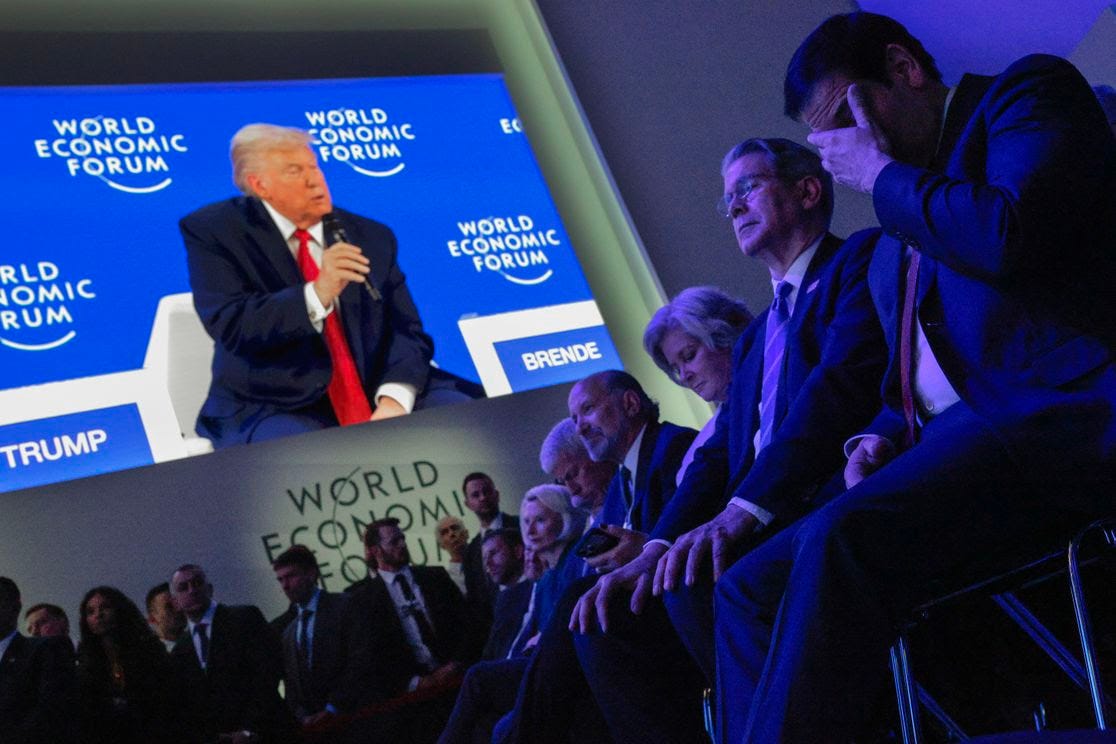
Seventy-five years after its founding, NATO finds itself in quite a peculiar position: more militarily powerful than ever, yet more existentially uncertain. The alliance that deterred Soviet tanks through the Fulda Gap now grapples with questions that would have seemed absurd during the Cold War. Can a military alliance designed for binary confrontation adapt to a multipolar world? Can it enforce democratic values it claims to champion? And perhaps most urgently— can it survive its own internal contradictions?
The Evolving Question: What Is NATO Actually For?
You’re right to think that NATO’s fundamental founding purpose was to deter Soviet aggression. After the Cold War, NATO spent the 1990s and 2000s trying to justify its existence through “out-of-area” missions like those in the Balkans and Afghanistan, essentially becoming more of a crisis management organization rather than a defensive alliance. NATO has evolved into something broader and more holistic than the static and binary Cold War standoff.
But deterrence against Russia absolutely remains central to NATO’s purpose. Russia’s 2014 Crimea annexation and the 2022 invasion forced NATO back to its roots while maintaining these expanded functions. So yes, it’s evolved to include things like cyber threats, terrorism, and cooperative security partnerships, but the core mission remains: stopping Russian aggression and maintaining the territorial integrity of NATO members.
The recent commitment to 5% GDP defense spending by 2035 signals NATO recognizes it’s in a new era of serious and unified conventional military competition. The alliance agreed at The Hague Summit to invest 5% of GDP annually— split between 3.5% for core defense and 1.5% for security-related spending like cyber defense and critical infrastructure. If all NATO allies meet this target, they’ll need to allocate roughly $4.2 trillion annually by 2035, an additional $2.7 trillion beyond 2024 spending levels.
NATO will continue to be more concerned with keeping globalization intact and not killing each other. More professionally put, NATO’s mission could be summed up like this: maintaining the liberal international order through deterrence, crisis management, and keeping member states aligned enough to prevent internal fractures that adversaries could exploit.
Article 5: Purposefully Ambiguous
“[Each member will take] such action as it deems necessary, including the use of armed force, to restore and maintain the security of the North Atlantic area”
Surprisingly, the fact that there is no automatic military response to an attack on a NATO member is news to many. This flexibility was crafted specifically because the U.S. didn’t want to make an ironclad commitment that might drag it into European wars, while Europeans wanted certainty of American protection. The result is what most scholars call “willful vagueness.”
Article 5 has only been officially invoked once— after 9/11, on behalf of the United States— which tells you something. Would it hold up if, say, Estonia were invaded tomorrow? It depends on the political will of the most powerful member states at that moment. So Estonia’s defense (and this applies to all smaller member states) is completely dependent on whether the American and European populace would support going to war with Russia over a small Baltic state.
Deterrence credibility doesn’t rest on the treaty text but on whether powerful allies are seen as willing and able to act. The Ukraine situation exposed this dynamic very clearly. Ukraine wasn’t a NATO member, so Article 5 was not supposed to apply, but the hesitancy of Western allies to provide certain weapons systems out of escalation fears suggests that even with Article 5, there would be serious debates about what constitutes an “appropriate” response.
Russia has been probing NATO’s eastern borders with drones and airspace violations to test these boundaries in the gray zone below what would clearly trigger Article 5. Playing tango with the devil here, Putin.
Is Europe Really Freeloading?
There is a common narrative that Europe is free-loading off of America’s sizable military contributions while their seniors enjoy free healthcare, but here’s a different frame of mind to look at it from. The U.S.’s substantial contribution to NATO is fair and makes sense because the U.S. gets something substantial in return: forward bases throughout Europe that project American power globally, intelligence sharing networks, diplomatic influence, and the ability to shape European security policy. NATO allies provide the real estate, overflight rights, and political cover for American military operations worldwide.
In 2024, the United States spent an estimated $967.7 billion on defense— approximately 3.4% of GDP— which represents about two-thirds of total NATO spending. European NATO members collectively spent $482 billion, reaching 2.02% of their combined GDP for the first time. That’s a massive increase from 1.43% in 2014, when only three allies met the 2% threshold. By 2024, 23 of 32 members exceeded it.
This is the price of being “the international police” and American politicians have actively sought this role for 75 years because it serves U.S. strategic interests. European NATO members collectively have more active-duty troops than the U.S. stations in Europe, and their geography-specific capabilities (like knowing how to operate in the Baltic or Arctic) are invaluable. The debate shouldn’t be about fairness in some abstract sense but about whether the current arrangement serves American strategic interests— and increasingly, with China rising in the Pacific, many U.S. strategists are questioning whether America can continue shouldering this burden or whether Europe needs to genuinely take responsibility for its own defense.
But all that military budget has gotta go somewhere. We’re looking at you, military-industrial complex…
Mandatory Minimum 5% of GDP
Absolutely hell yeah to a mandatory minimum. The shift from 2% to a binding 5% (3.5% core defense + 1.5% security-related) by 2035 represents NATO finally growing some balls about not a collective, but a unified burden-sharing.
The mandatory target forces political accountability, enables better collective planning (if NATO knows with certainty what resources will be available, it can develop coherent strategies rather than constantly adapting to whatever each country feels like contributing), and signals credible commitment to adversaries—Putin doesn’t fear a NATO where half the members aren’t meeting basic spending thresholds; he fears a NATO where all 32 members are investing seriously in military capability.
On the other hand, many European countries are already facing debt crises, and finding an extra 2-3% of GDP for defense means cutting social programs or raising taxes— politically toxic in liberal democracies. If all NATO members hit 5%, the alliance would spend more than total global defense spending currently. That’s absurd.
But more importantly, NATO needs less focus on hitting arbitrary numbers and more on capability requirements: how many brigades can you deploy? How quickly? With what sustainment? A country spending 2% efficiently on the right capabilities might contribute more than one spending 5% on prestige projects or bloated bureaucracies— the American free marketeers should know that by now.
So mandatory minimums make sense and are a good start, but they should be tied to specific capability commitments— “you must be able to field X battalions within Y days”— rather than just GDP percentages. The percentages provide useful political benchmarks, but they’re means to an end, not ends in themselves.
The Democratic Deficit: Turkey, Hungary, and NATO’s Values Crisis
Is NATO practicing what they preach? No (see Hungary, Turkey). Though it should be framed less as hypocrisy and more as NATO prioritizing military capability and geographic position over ideological purity. Turkey controls the Bosporus and has the second-largest military in NATO. Hungary sits at a strategic crossroads in Central Europe. NATO accepted them knowing the values alignment was imperfect because the strategic value was too high.
But as NATO becomes more unified and develops as time goes on, this dynamic should shift. Turkey has bought Russian S-400 missile systems that can undermine NATO’s integrated air defense. Erdogan has blocked defense plans for Baltic states over disputes about Kurdish forces. Hungary’s Orban has repeatedly obstructed Ukraine support and Sweden’s accession while cozying up to Putin. U.S. Senator Ben Cardin called Hungary “the least reliable” NATO ally in 2024.
Hypernationalism and corrupt ties with Russia have led to decisions that have compromised NATO decision-making and weakened the alliance’s military readiness. NATO also has no mechanism to enforce its values. There’s no way to suspend or expel members for democratic backsliding.
During the Cold War, NATO tolerated authoritarian members (Portugal, Greece, Turkey after coups) because the Soviet threat was existential. The calculation today should be different, but old habits still persist. And if not now, then never.
Turkey and Hungary expose that NATO functions as a military alliance. There’s no teeth behind the “liberal democracy, rule of law.” And some even argue NATO should stay out of domestic politics and focus purely on defense. But this misses how democracy and autocracy affect military effectiveness and alliance reliability.
Would Erdogan’s Turkey actually defend Estonia if Putin invaded? Or would Hungary? Their domestic authoritarianism and ties to Moscow create legitimate doubts about their Article 5 reliability. NATO needs either stronger enforcement mechanisms or an honest admission that it’s a military alliance of convenience, not a democratic club.
Can NATO Survive Without Washington?
Mark Carney recently gave a powerful “middle powers unite!” speech at the WEF, but how realistic is this? Europe obviously lacks critical military capabilities that only the U.S. provides. More than just people and bullets, the U.S. is needed for the theater-level expertise in running high-intensity combat at scale... that will be one of the most difficult aspects for Europe to ever make up for.
Could Europe defend itself if forced to? Maybe, but it would take a decade of massive investment and integration. Europe collectively has more active-duty troops than the U.S., outspends Russia significantly, and has sophisticated defense industries. But these are fragmented across 27+ countries with different languages, procurement systems, and strategic cultures. The U.S. provides that necessary integrating framework. Without it, NATO would need to basically rebuild its entire command structure and capability base from scratch.
But let me be clear, there is mutual benefit, so I don’t think this is a question we should be asking ourselves. The U.S. benefits enormously from NATO— bases, intelligence partnerships, diplomatic legitimacy for any of their radical global operations, a unified market of wealthy democracies. But it could survive without NATO by pivoting entirely to the Pacific. Europe cannot currently survive without the U.S. security guarantee, which is why, I think, there’s so much panic about Trump’s unreliability.
The real question is whether the U.S. will maintain enough commitment for NATO to remain credible. If America’s focus shifts decisively to China, which it seems it is, NATO might technically survive but become a structure without substance. Europe knows this, which is why we’re seeing increased European defense spending and talk of “strategic autonomy.” They’re hedging against American unreliability, which itself weakens the alliance.
It’s pretty circular when you think about it: the more Europe doubts America, the more it invests independently, which makes America question the value of the alliance, which makes Europe doubt more. NATO can’t survive this spiral without renewed commitment on both sides.
So where does this leave us? With a 75-year-old alliance that can’t kick out authoritarian members, can’t guarantee it’ll defend small countries, and can’t decide what it even is. But hey, at least everyone’s finally spending 5% of GDP, right? What could possibly go wrong when you throw trillions at an institution experiencing an existential identity crisis? NATO: too big to fail, too contradictory to succeed, too necessary to abandon. The perfect metaphor for the liberal international order itself.
See ya, folks. Stay curious.
-- J&E